

India Two-Wheeler Loan Market Overview 2026–2034
According to the latest research report titled “India Two-Wheeler Loan Market Size, Share, Trends and Forecast by Product, Indication, and Region, 2026–2034”, the report provides a comprehensive analysis of market size, growth trends, competitive landscape, and regional insights shaping the industry.
How Big is the India Two-Wheeler Loan Market?
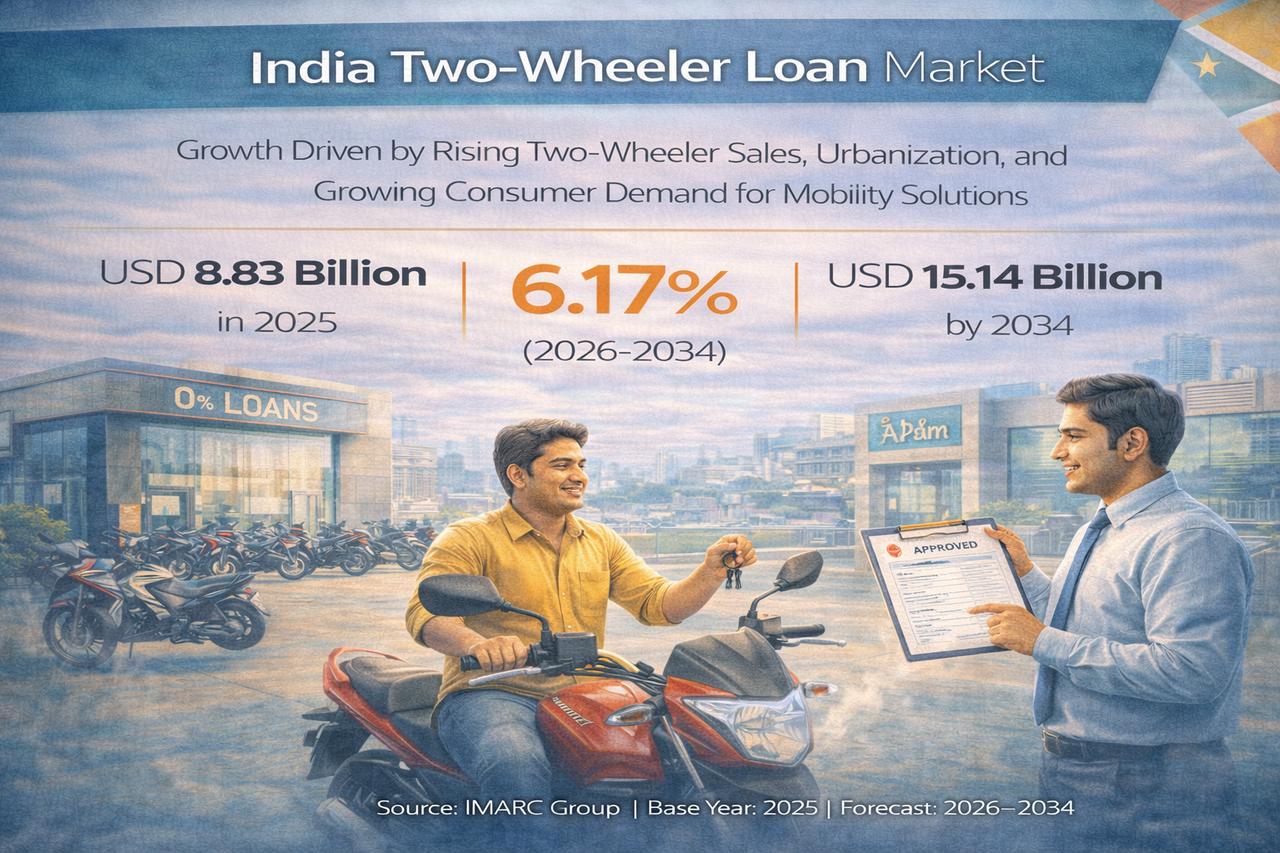
The India two-wheeler loan market is a dynamic segment of consumer finance in India, driven by rising vehicle ownership, expanding consumer credit access, and evolving financing technologies. The market size was valued at USD 8.83 Billion in 2025 and is expected to reach USD 15.14 Billion by 2034, exhibiting a compound annual growth rate (CAGR) of 6.17% during 2026–2034.
Download a Sample PDF of the Report from the website
What are the Latest Emerging Trends in India Two-Wheeler Loan Market?
India's vehicle finance landscape is undergoing a profound transformation, driven by digital innovation, the electric vehicle revolution, and a strategic push toward financial inclusion. At the forefront of this change are digital lending platforms, which are fundamentally reshaping how credit is accessed. By leveraging paperless applications, machine learning-based credit assessments, and instant decision-making algorithms, these platforms are dramatically improving loan accessibility. For first-time buyers and underserved segments, this means streamlined documentation, reduced processing times, and the ability to secure financing without traditional bureaucratic hurdles, enabling broader adoption across both urban and semi-urban India.
Simultaneously, the rising popularity of electric two-wheelers is creating a specialized financing ecosystem. As environmental consciousness grows and consumers recognize the lower running costs of EVs, lenders are responding with tailored loan products designed specifically for this segment. These dedicated EV financing solutions feature flexible structures, competitive interest rates, and extended repayment tenures that acknowledge the unique economics of electric vehicles. This alignment between product innovation and consumer demand is proving crucial in accelerating the adoption of financed electric two-wheelers, making sustainable mobility accessible to a wider demographic.
Perhaps most significantly, lenders are aggressively expanding their footprint into rural and semi-urban markets, moving beyond traditional metropolitan strongholds. This strategic shift toward broader financial inclusion is characterized by eased eligibility criteria, flexible documentation requirements, and strong collaborations with local dealership networks. By understanding and adapting to the unique needs of these emerging customer segments, financial institutions are successfully extending loan reach to millions of first-time borrowers. The convergence of digital accessibility, specialized EV financing, and rural market penetration is creating a dynamic and inclusive vehicle finance ecosystem that promises to power India's mobility aspirations for years to come.
What Growth Factors are Driving India Two-Wheeler Loan Market ?
India's nutraceutical market is experiencing unprecedented growth, driven by a fundamental shift in consumer mindset from treatment to prevention. Rising health awareness, accelerated by the pandemic, has made immunity and wellness daily priorities rather than occasional concerns. Increasing prevalence of lifestyle diseases such as diabetes, obesity, and cardiovascular disorders is prompting consumers to proactively incorporate dietary supplements, functional foods, and fortified beverages into their routines. This behavioral transformation, strongest across urban and semi-urban populations, reflects a deeper understanding that nutrition is the foundation of long-term health.Supporting this cultural shift is the steady expansion of India's middle class and rapid urbanization. As disposable incomes rise and lifestyles become increasingly hectic, urban consumers are turning to nutraceuticals to bridge nutritional gaps created by irregular diets and mounting stress. The convergence of fitness trends, wellness consciousness, and proactive health management is creating sustained demand across demographics. What was once a niche category is now becoming mainstream, with consumers viewing supplements as essential components of daily wellness rather than optional additions.
Innovation is accelerating at every level of product development. Manufacturers are moving beyond traditional tablets and capsules to offer engaging formats like gummies, effervescent tablets, protein bars, and ready-to-drink beverages. Plant-based and clean-label formulations are gaining traction among health-conscious buyers. Perhaps most significantly, personalized nutrition is emerging as a powerful trend, with products tailored to age, gender, lifestyle, and specific health concerns. Advances in biotechnology and microbiome research are enabling increasingly targeted, science-backed formulations that build consumer confidence through demonstrated efficacy.The digital revolution has transformed how nutraceuticals reach consumers. The explosive growth of e-commerce platforms and direct-to-consumer brands has dramatically improved accessibility, while AI-driven health assessments and subscription models enhance engagement and retention. Online channels are proving particularly effective in penetrating Tier II and Tier III cities, expanding the consumer base far beyond metropolitan boundaries. Finally, a supportive regulatory framework with strengthened safety standards and clearer labeling norms is enhancing transparency and credibility. Government initiatives promoting nutrition awareness and traditional wellness systems further boost market development, creating an ecosystem where innovation thrives and consumer trust deepens. Together, these forces are positioning India's nutraceutical sector for sustained, transformative growth.
India Two-Wheeler Loan Market Segmentation
Type
- New Two-Wheeler: Dominates with a 68% market share in 2025, driven by warranties, newer features, and financing packages from dealerships.
- Used Two-Wheeler: Present but less dominant compared to new two-wheelers.
Provider Type
- Banks: Leading with 43% market share, leveraging extensive branches, consumer trust, and competitive interest rates.
- Non-Banking Financial Companies (NBFCs): Compete on flexible offerings and speed of processing.
- Original Equipment Manufacturer (OEM): Collaborate for embedded financing options.
- Others: Include emerging fintech platforms.
Percentage Amount Sanctioned
- Less Than 50%: Largest segment with 56% share, reflecting conservative borrowing and risk mitigation.
- More Than 50%: Smaller segment, with higher loan-to-value ratios and interest rates.
Tenure
- Less Than 3 Years: Smaller share representing borrowers who prefer rapid debt elimination.
- 3 Years: Largest share at 45%, balancing monthly affordability and total interest costs.
- More Than 3 Years: Growing in popularity for reduced monthly payments, offered by some NBFCs.
Regional Insights
- North India
- South India
- East India
- West India
The South India region dominated the market in 2025 with a 33% share. This dominance is supported by economic growth in metropolitan areas such as Chennai, Bangalore, and Hyderabad, which have higher disposable incomes and technological adoption. The region benefits from established manufacturing hubs and a tech-savvy consumer base, contributing to steady market growth with a CAGR of 6.17%.
India Two-Wheeler Loan Market Evolve in the Coming Years?
The India Two-Wheeler Loan Market is expected to witness steady expansion, supported by rising urbanization, improving credit penetration, and growing demand for affordable mobility solutions. Increased adoption of digital lending platforms, faster loan approvals, and AI-driven credit assessments will enhance accessibility. Additionally, financing for electric two-wheelers will gain momentum amid sustainability initiatives. Expanding rural outreach and flexible repayment structures will further strengthen market growth through 2034.
With revenues projected to grow from USD 8.83 Billion in 2025 to USD 15.14 Billion by 2034, the market is set to experience sustained double-digit growth. Expansion into rural and semi-urban markets, coupled with rising export potential, will further strengthen long-term structural opportunities.
India Two-Wheeler Loan Market Recent Developments & News
- September 2024: OLX India partnered with IDFC FIRST Bank to launch an end-to-end financing solution for pre-owned vehicles, facilitating easier loan access on the OLX platform.
- April 2024: CASHe introduced "CASHe Green", offering tailored financial options for electric two-wheeler buyers, with loans up to INR 2 lakh and interest rates below one percent per month.
These developments indicate growing innovation and focus on electric vehicle financing and used two-wheeler market facilitation.
Competitive Landscape
The report offers an in-depth examination of the competitive landscape, including market structure, key player positioning, leading strategies for success, a competitive dashboard, and a company evaluation quadrant.
Key Highlights of the Report
- Comprehensive analysis of market size, share, and growth trends from 2020 to 2034.
- Detailed segmentation by type, provider, loan amount sanctioned, tenure, and region.
- Insights into digital and electric vehicle financing trends.
- Examination of growth drivers, market challenges, and competitive landscape.
- Recent strategic partnerships and developments impacting market dynamics.
- Customized post-sale analyst support and flexible delivery formats.
Get Custom Report Based on Your Interest
Customization Note
If you require any specific information not covered within this report’s scope, we will provide it as part of the customization.
Frequently Asked Questions
Q1. How big is the India two-wheeler loan market?
The market was valued at USD 8.83 Billion in 2025.
Q2. What’s the expected growth trajectory?
It’s projected to reach USD 15.14 Billion by 2034 at a 6.17% CAGR (2026–2034).
Q3. Which segment dominates by type?
New two-wheeler loans lead the market with 68% share in 2025.
Q4. What are the Key Factors?
Key factors driving the India two-wheeler loan market include rising urbanization and middle-class expansion, digital transformation enabling instant loan approvals, government incentives for electric two-wheelers, flexible financing options, and expanding financial inclusion in semi-urban and rural areas.
About Us
IMARC Group is a global management consulting firm that helps ambitious changemakers create a lasting impact. The company offers comprehensive market assessment, feasibility studies, incorporation support, regulatory assistance, branding and strategy services, and procurement research.
Contact Us
IMARC Group
134 N 4th St. Brooklyn, NY 11249, USA
Email: sales@imarcgroup.com
Tel: (D) +91 120 433 0800
United States: +1-201971-6302